How Dashcam Footage Can Impact a Personal Injury Case
California traffic is unpredictable. Between dense freeway congestion, distracted drivers, and sudden lane changes, collisions can happen in the blink of an eye. For anyone involved in a car accident, what happens in those few seconds often becomes the central question in any resulting personal injury claim: who was actually at fault?
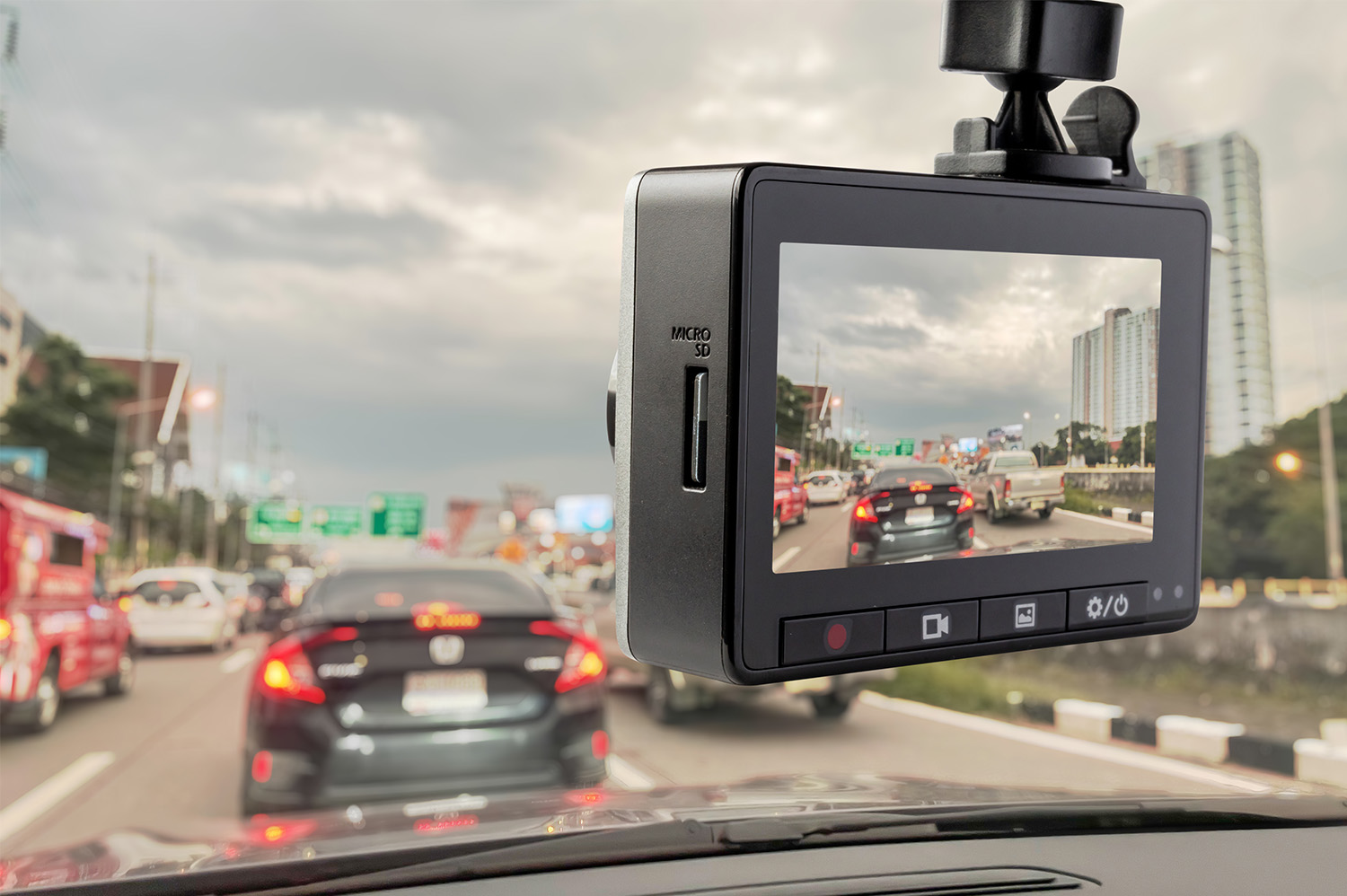
This is where dashcam footage has become one of the most valuable tools available to accident victims. As dash cameras have grown more affordable and common on California roads, they have started to play a significant role in how insurance companies, attorneys, and courts evaluate fault and damages. If you have a dashcam, or if you are wondering whether to install one, understanding how this footage can affect a personal injury case is worth your time.
Why Dashcam Footage Matters So Much
Most car accident cases come down to a dispute over facts. One driver says the light was green. The other says it was red. One driver claims the other swerved into their lane. The other denies it. Without an objective record, these cases often rely on police reports, witness statements, and the recollections of the people involved, all of which can be incomplete or contradictory.
A dashcam removes much of that uncertainty. Video footage shows speed, following distance, signal timing, lane position, and the sequence of events leading up to a collision. Insurance adjusters and courts give significant weight to this kind of objective evidence because it is far harder to dispute than conflicting verbal accounts. In a state where comparative negligence rules apply, having clear footage can directly affect how fault is assigned and how much compensation a person ultimately recovers.
California’s Comparative Negligence Rule
California follows a pure comparative negligence system. This means that even if you were partially at fault for an accident, you can still recover damages, but your compensation gets reduced by your percentage of fault. For example, if a court determines you were 20 percent responsible for a collision, your total recovery would be reduced by that same percentage.
This rule makes dashcam footage especially important. Insurance companies have a financial incentive to shift as much fault as possible onto the injured party, since doing so lowers their payout obligation. Clear video evidence showing exactly how an accident unfolded can prevent an insurer from unfairly assigning you a larger share of fault than you actually bear.
What Dashcam Footage Can Help Establish
Dashcam video can support several key elements of a personal injury claim, including:
Fault and liability. Footage can show which driver ran a red light, failed to yield, or made an unsafe lane change, removing much of the guesswork from a fault determination.
Vehicle speed and behavior. Some dashcams record speed data alongside video, which can help establish whether a driver was speeding or driving erratically before a crash.
Road and weather conditions. Footage captures the environment at the time of the accident, including visibility, road surface conditions, and traffic patterns, all of which can be relevant to a claim.
The moments immediately after a collision. Recordings sometimes continue after impact, capturing reactions, admissions, or behavior that can be relevant to the case, such as a driver acknowledging fault at the scene.
Common Questions About Using Dashcam Footage
Is dashcam footage legal to use in California?
Yes. California permits the use of dash cameras, and footage obtained from them is generally admissible as evidence, provided it was lawfully recorded. California does have specific rules around audio recording and consent under its wiretapping laws, so if your dashcam also records audio, it is worth understanding how those rules might apply to your situation.
What should I do with the footage after an accident?
Preserve it immediately. Many dashcams overwrite old footage automatically once the memory card fills up, so it is important to save or back up the relevant clip as soon as possible after a collision. Download the file to a computer or cloud storage, and avoid editing or altering it in any way, since unaltered footage carries far more weight as evidence.
Can footage from someone else’s dashcam help my case?
It can. If another driver, a passenger, or even a nearby business with security cameras captured the accident, that footage may also support your claim. Witnesses with dashcams are sometimes willing to share their recordings, particularly if asked soon after the incident while the footage is still available.
Does dashcam footage guarantee a favorable outcome?
No single piece of evidence guarantees a particular result, and footage does not always tell the complete story. Camera angles can be limited, lighting conditions can obscure details, and footage may only capture part of an incident. Dashcam video works best as one piece of a larger body of evidence, alongside police reports, witness statements, medical records, and accident reconstruction when necessary.
Why This Evidence Often Makes a Difference
Personal injury claims frequently hinge on credibility. When two parties offer different versions of events, the available evidence often determines whose account is accepted. Dashcam footage gives an objective, time-stamped record that insurance companies and courts can rely on, which can speed up settlement negotiations and reduce the likelihood of a prolonged dispute over fault.
For accident victims throughout California, this kind of evidence can be the difference between a fair settlement and a drawn-out fight over liability. If you have footage from a recent accident, preserving it correctly and understanding how to use it effectively can meaningfully strengthen your position.
Speak With a California Personal Injury Attorney
If you have been injured in an accident and have dashcam footage, or you are unsure how to obtain footage that may support your claim, it helps to talk with an attorney who handles personal injury cases regularly. The Law Offices of Brent D. George works with accident victims throughout California to evaluate evidence, including dashcam footage, and help build the strongest possible case for fair compensation. Every situation is different, and getting informed guidance early can make a meaningful difference in how your claim unfolds.
If you have questions about a recent accident, contact the Law Offices of Brent D. George today for a free confidential consultation to discuss your case and your legal options.
Disclaimer: This article is intended for informational purposes only and does not constitute legal advice. For personalized assistance, please contact our office at (805)494-8400.